A first-person descent through the fluorescent-lit sublevels of a building that closed hours ago
Every empty room you walk into looks a little more like the last one you tried to leave.
No combat. No inventory. No chase. You move, you look, you take the elevator down.
Vacancy is a PSX/VHS-styled liminal-space horror walker. It is small, quiet,
and deliberately ugly in the way old hardware was ugly. The dread is built entirely out of
repetition, wrongness, and restraint — there is no enemy and nothing to fight.
Each descent opens onto another sublevel that is almost the floor you just left — the same
corridors, the same doors, the same hum — but something is off. A light that was steady now
stutters. A chair has turned to face the wrong way. A door that was shut stands ajar. None of it is
loud. Each individual wrongness is small enough to talk yourself out of. They accumulate.The most frightening thing the game does is, occasionally, on arrival at a new floor, cut every sound to total silence for two seconds.
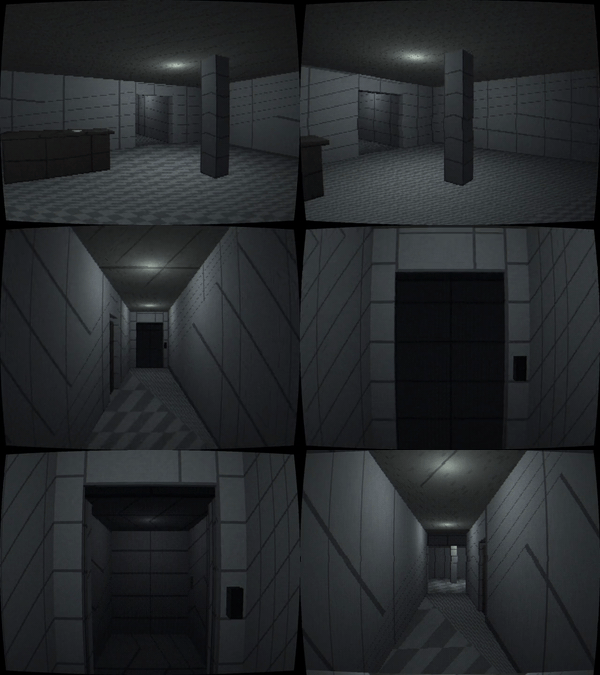
Gallery
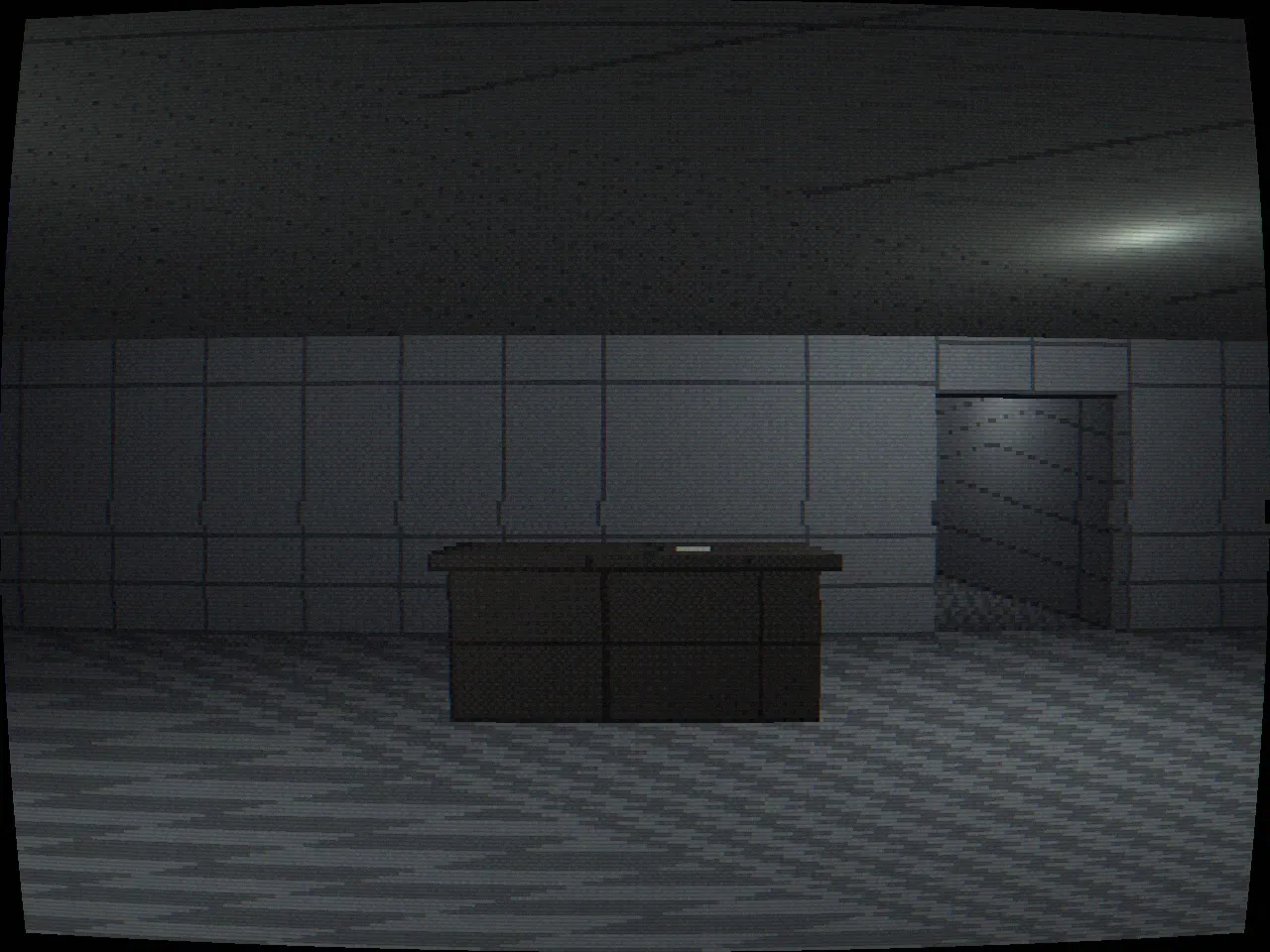
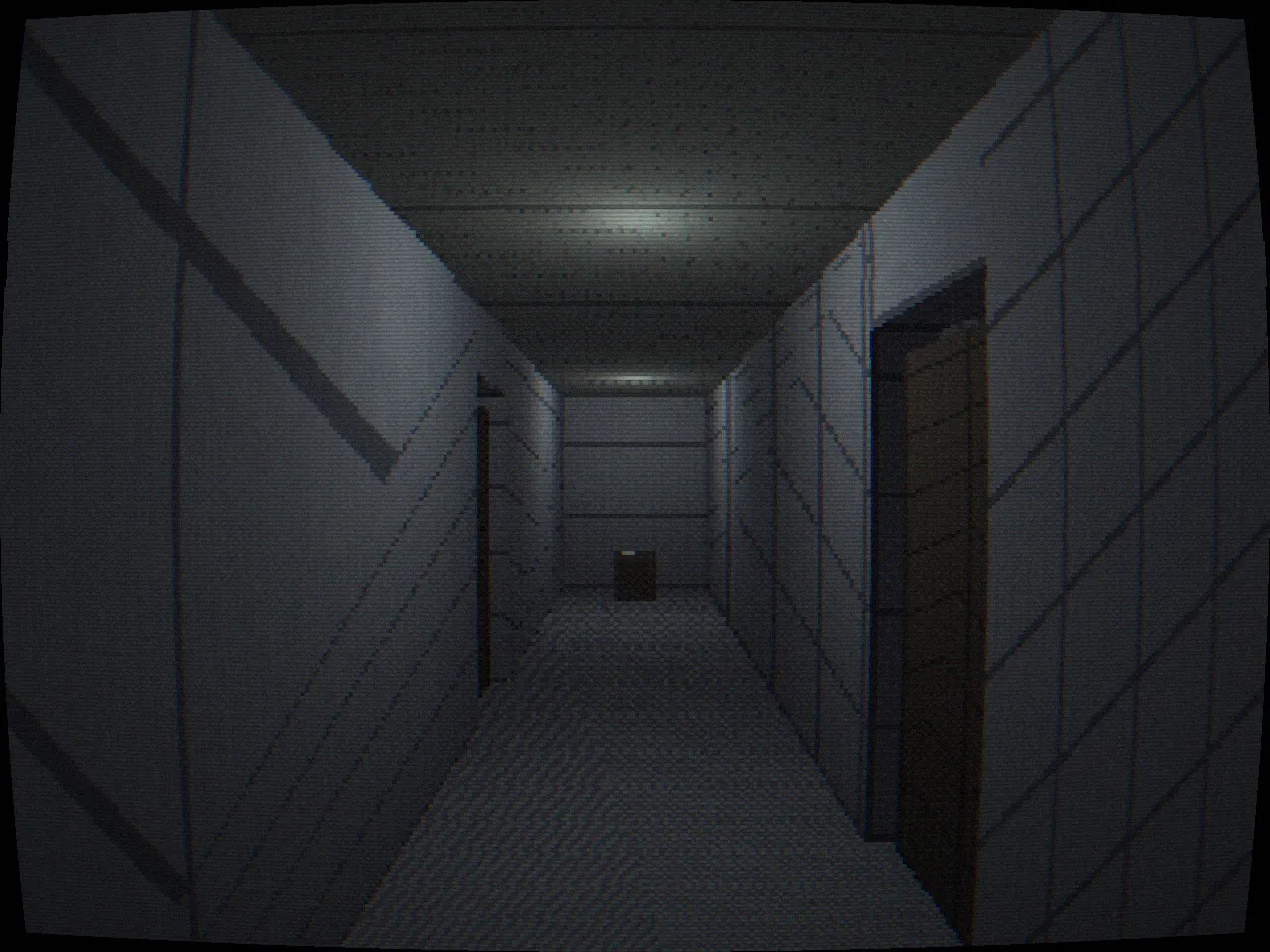
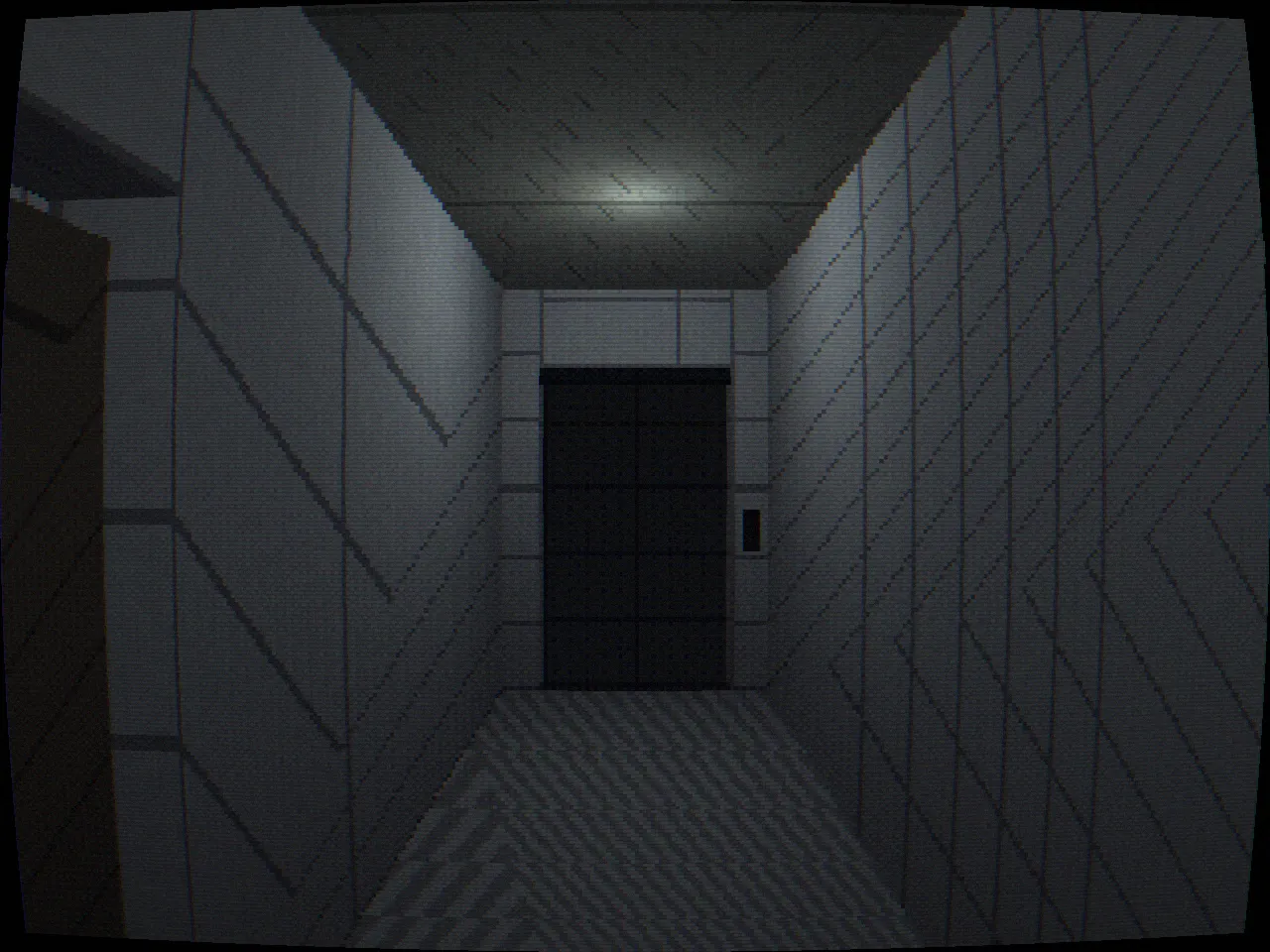
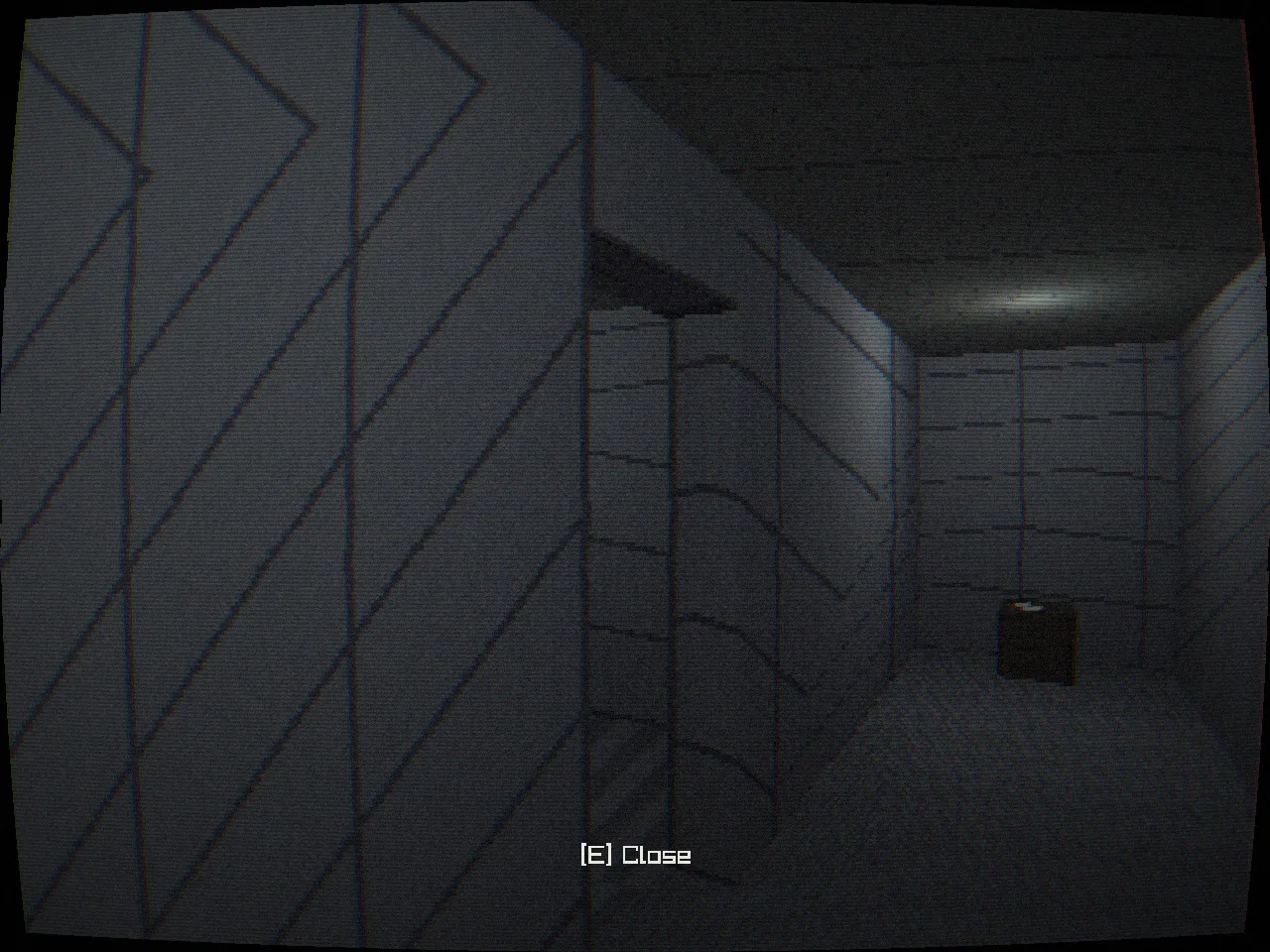
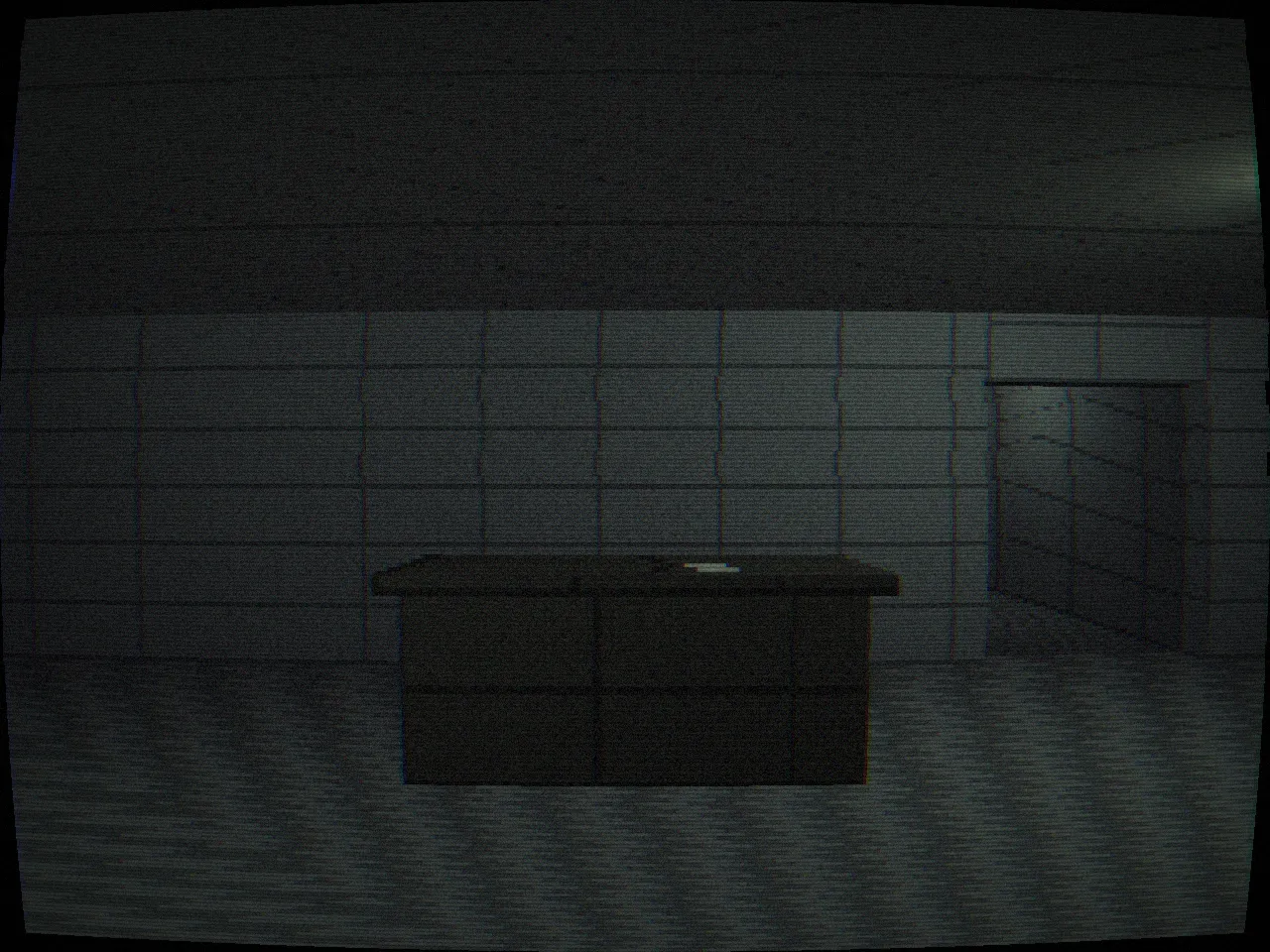
The lobby — where it starts, and where it endsA sublevel corridor — the same building, made wrongThe elevator — the spine of the game; it only goes downDeep sublevel — the picture decays the further you goThe wrong final lobby — lit sickly green, with no way out
The look is the engine
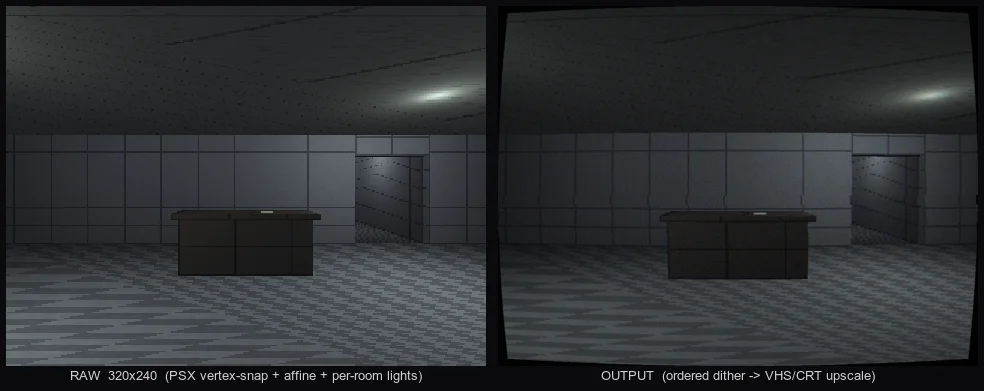
Left: the raw 320×240 PSX render. Right: the same frame after the dither + VHS/CRT post chain.
320×240 buffer
The whole 3D world renders into a tiny internal buffer, then stretches up with nearest-neighbor. Native UI sits on top.
Vertex snapping
Geometry jitters to a coarse grid — the classic PlayStation wobble as you move and turn.
Affine texturing
Perspective-incorrect UVs, so textures swim and warp across surfaces exactly like 1997 hardware.
Dither / bit-crunch
An ordered-dither pass quantizes the color depth, banding the gradients into something sickly.
VHS / CRT pass
Scanlines, barrel distortion, chromatic aberration, tracking noise, and roll degrade the picture further.
Decay scales with depth
The deeper you descend, the worse the signal gets. The picture decaying is the building decaying.
Built twice, one game
The same game — same layout, systems, audio, anomalies, and ending — built from one design on two
completely different foundations. A full measured writeup lives in
GODOT_VS_RAYLIB.md.
Godot port
raylib port
Engine
Godot 4.6 (Forward+)
raylib 6.0 (from source)
Language
GDScript
C (C11)
World
scenes (.tscn) + nodes
hand-built meshes + colliders in code
Lighting
engine omni lights + shadows
per-room point lights in a shader
Audio
engine buses + reverb
hand-rolled mixer + Schroeder reverb
Ships as
68 MB binary
1.7 MB binary
scc code lines
1,971
2,141
Cyclomatic complexity
185
435
The one-number version: the two builds are nearly the same size by line count,
but the C port carries ~2.4× the cyclomatic complexity (185 → 435) — because in raylib
you write the collision, lighting, audio mixing, and state machines the engine otherwise hands you for free.
Performance (one machine, Apple Silicon)
Metric
Godot
raylib
Shipping binary
68 MB
1.7 MB
~40× smaller
Cold start → first frame
~0.6 s
~0.4 s
~1.6× faster
Peak memory (max RSS)
~235 MB
~90 MB
~2.6× less
CPU per rendered frame
~2.3 ms
~0.35 ms
~6–7× lighter
Frame rate (this scene)
60 fps
60 fps
tie (both locked)
The honest read: at a desktop 60 fps lock the two are a wash on frame rate and CPU% — both
hold 60 trivially. raylib's wins are all in the floor, not the ceiling: a ~40× smaller binary,
~⅓ the memory, a faster start, and ~6–7× less work per frame. That headroom is latent on a desktop but
decisive on weak hardware, at high refresh, or with far more on-screen geometry.
How it plays
MoveW A S D
LookMouse
Walk slowly (hold)Shift
Crouch (hold)Ctrl
Interact — doors, buttons, notesE
Release cursor / dismiss noteEsc
Movement is deliberately slow (~3 m/s) — this is a game you move through carefully, listening. A
distance-keyed headbob keeps footsteps in sync at any speed; footstep timbre changes with the floor surface.
This spoils the ending — which is the point of the game. Click to expand.
After enough descents (seven, by default) the doors open not onto another sublevel but onto the
original lobby — the one you started in. Except it's empty, dimmed, and lit a sickly
green; one tube is dead and another flickers. The desk note has changed. The front doors — locked all
night — are now unlocked.
You walk to them, push them open, and you are standing back at the elevator. The exit leads inward.
There is no way out. You read the last note, the screen fades, a title holds for a moment in the dark,
and that's it. No reveal, no creature, no explanation. The horror is that there's no exit.
Take the elevator down
Play it right now in your browser — no install, no download. Or build the native raylib port, which is self-bootstrapping: it fetches and builds raylib 6.0 on first run, then the game.